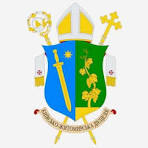

The Secular Order of the Blessed Virgin Mary of Mount Carmel (Ordo Carmelitarum Discalceatorum Saecularis, OCDS; Statutes I: 2, 3, 5) is an ecclesial association and an integral part of the Order of Discalced Carmelites. Juridically, it is subject to the Provincial Superior of the Kraków Province of the Order of Discalced Carmelites.
The Secular Order has juridical personality and operates in accordance with the Code of Canon Law, the Constitutions of the Secular Order of Discalced Carmelites, its Statutes and other norms concerning the Secular Order.
The Order traces its beginnings to holy Mount Carmel, which, in the words of John Paul II, “the biblical world regarded as a symbol of grace, blessing and beauty. It was here that the Carmelites built their first church and dedicated it to the Virgin Mary, Flos Carmeli (Flower of Carmel). In doing so, they wished to bear witness to their total dedication to Mary and to unity in serving her and serving Christ.”
The prophet Elijah is the model of Carmelite spirituality and stands at the beginning of Carmel’s history. His vision of the little cloud rising from the sea is of particular importance to Christian and Carmelite devotion and is regarded as a prefiguration of the revelation of the Immaculate Conception.
In the twelfth century, knights, crusaders, pilgrims, penitents and hermits came to Elijah’s spring on Mount Carmel in response to a hidden, interior call from Mary. Their ideal was the radical following of Christ through genuine poverty, fasting, physical labour, prayer and solitude.
At the request of these lay hermits, Albert, Patriarch of Jerusalem, composed a Rule of life for them between 1206 and 1214; it was subsequently approved by Pope Gregory IX.
The Muslim conquest of the Holy Land led Carmelite hermit communities to spread throughout Europe. Mary protects those who turn to her; she watches over them, never abandons them and guides them in times of growth and trial.
On 16 July 1252, while Simon Stock, Prior General of the Order, was praying, Mary appeared to him surrounded by angels and pointed to the Scapular, saying: “This shall be a privilege for you and for all Carmelites: whoever dies wearing it shall not suffer eternal fire.”
Under the guidance of Carmelite spiritual fathers, women too were filled with the desire to live a contemplative life after the example of the hermits, withdrawing from the world. It was at this time that the third branch of the Carmelite Order was born.
Blessed John Soreth (1394–1471), after receiving priestly ordination, became a master of theology and director of studies at the Order’s college in Paris. In 1440 he was elected Provincial of the French Province, and in 1451 Prior General of the whole Order. He was a zealous servant of the people, the Order and God. He followed the Gospel words on which the first hermits of Mount Carmel had based their lives: “I am the vine; you are the branches. Whoever remains in me and I in him will bear much fruit, because without me you can do nothing” (Jn 15:5).
At his request, Pope Nicholas V, in the bull Cum nulla fidelium, established the female branch of the Order—the Carmelite nuns—and approved a Carmelite form of life for lay men and women as the Carmelite Third Order.
Commenting on the Order’s constitution, he wrote that Carmelites “can at every moment […] withdraw, after the example of the Virgin of Nazareth, into the inner cell of the heart, so as to meditate with her and as she did on the Word of God.” This remains relevant today. The meaning of Carmelite life is union with God in unceasing prayer.
A Secular Carmelite becomes contemplative when faithful to the simplicity of everyday life and when striving to remain close to God with heart, mind and thought (cf. Constitutions III, 17).
In the sixteenth century, this way of life was reformed in the Flame of Love by two great saints and Doctors of the Church: St Teresa of Jesus and St John of the Cross. They were mystics with a profound experience of eternal life and, through it, of human life.
“The vocation of Teresian Carmel is a commitment to ‘live in allegiance to Jesus Christ’ and to ‘meditate day and night on the law of the Lord and keep vigil in prayer’ (Rule 2 and 8). The Secular Carmelite is therefore called to strive to let prayer permeate his or her whole life, so as to walk in the presence of the living God, practising faith, hope and charity each day” (Constitutions III, 17).
“Prayer,” says St Teresa of Jesus, “is nothing else than an intimate sharing between friends; it means taking time frequently to be alone with him who we know loves us.”
St John of the Cross did not simply teach prayer; he sought to help people transform their whole life into continuous prayer: to live in order to pray and to pray in order to live.
The life they introduced therefore consists in the most intimate sharing of personal experience.
St Thérèse of the Child Jesus and the Holy Face, author of the story of her soul, was proclaimed a Doctor of the Church. Speaking of her little way, she writes: “For me, prayer is a surge of the heart; it is a simple look turned toward heaven, a cry of recognition and of love, embracing both trial and joy; finally, it is something great, supernatural, which expands my soul and unites me to Jesus.”
What riches the Order gives us—how many holy fathers, holy sisters and holy Secular Carmelites!
The roots of one tree cannot be separated. They intertwine and reach out in search of nourishment so that the tree may produce abundant foliage and generous fruit.
“It is one family with the same spiritual possessions, the same call to holiness and the same apostolic mission. The Secular members contribute to the Order the benefits proper to their secular state of life” (Constitutions I, 1).
The following is a short passage from a letter dated 29 July 2022 to us, the Secular Carmelites, from Fr Miguel Márquez Calle, OCD, Superior General of the Order: “The shared charism, lived according to the particular character of our state of life, is received in the full awareness that, in responding to God’s call, each person lives his or her vocation fully for the enrichment of the whole body. In other words, the richness and fullness of spirituality, charism and belonging is an integral gift for the laity, the nuns and the friars, regardless of their role. This truth, which constitutes us as an Order, is more than a ‘privilege’ or empty ‘pride’: it roots us in the awareness of a true vocation in the Church—a vocation to live by listening daily to the Word, in community, open to God’s coming into our lives and to the breath of the Spirit, seeking the truth together.”
“Many generations of Carmelites, from the beginning of the Order down to the present day, in their journey towards the Holy Mountain, Jesus Christ, have sought to fashion their lives after the example of Mary” — St John Paul II.
Mary is the guiding star, Stella Maris. She is the model disciple of Christ. The Constitutions place special emphasis on the gift we learn from her: the ability to listen to the Word (Constitutions V, 29).
Karmel.org.ua