Foundation and Development
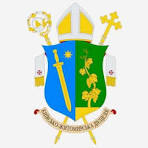
The Congregation of the Sisters of St Joseph was established in Lviv through the initiative and spiritual inspiration of St Zygmunt Gorazdowski, for selfless spiritual and practical service to society. Its historical foundation date is considered to be 17 February 1884. At that time, Galicia in general and Lviv in particular suffered from material poverty and moral neglect. Zygmunt Gorazdowski, a priest of the Archdiocese of Lviv, could not remain indifferent to this need. A compassionate person and zealous pastor, he responded with heart and mind to the cries for help he encountered at every turn. He answered the needs of his time by establishing a series of charitable works of Christian mercy to alleviate poverty. These included a voluntary work house for beggars, where they could enjoy decent living conditions and rebuild their human dignity through work. At his initiative, a home was opened for people with incurable illnesses and those needing rehabilitation, together with a low-cost dining room for the poor. As these responsibilities continued to grow, Fr Zygmunt found it difficult to manage alone. In 1882, he therefore invited several women of the Secular Franciscan Order, known as tertiaries, to work with him. They became the beginnings of the Congregation of the Sisters of St Joseph. In time, the Congregation acquired its own distinctive habit and symbols and became an apostolic congregation of pontifical right.
As the Congregation developed, the sisters joined existing ministries and opened new ones:
– caring for the sick in hospitals, health centres, outpatient clinics and private homes;
– caring for and educating orphans and neglected young people;
– working in kindergartens;
– running literacy classes.
The work of the Sisters of St Joseph is shaped by the charism handed down by their founder.
The sisters’ unseen work and prayer are a treasure concealing great sacrifice, without which the world cannot do and life cannot be sustained. In this way, they live out their motto: “Heart with God — hands at work.” In 1892, the Infant Jesus Home was founded in Lviv to shelter abandoned children and mothers with infants who had nowhere to go. In 1899, the Congregation established its first residential home for orphans and children from troubled families in Krosno, Poland, which still exists today. Sr Salomea Danek became the Congregation’s co-foundress, the founder’s closest collaborator and its first Superior General.
The Superior General exercises the highest authority in the Congregation. She is responsible for its development and the fulfilment of the founder’s charism, for good and healthy relations among provinces, delegations and houses directly dependent on the General House, and for the missions. The Second World War swept into the Josephite Sisters’ established rhythm of work like a devastating hurricane. From 1939, changes to Poland’s borders brought the territories of Lviv, Ternopil and Ivano-Frankivsk into the Ukrainian SSR. Of the Congregation’s 45 houses, only eleven survived this difficult period. Almost 200 sisters were expelled from their homes; some were deported, while others died during the war in the course of their duties, including known cases of martyrdom. In 1946, the Congregation was forcibly expelled to Poland, losing its General House in Lviv and all its houses in the Lviv, Ternopil and Ivano-Frankivsk regions. The General House then moved to Tarnów, Poland. The rise of communist rule in Poland brought major changes and restrictions on the sisters’ work, but they remained faithful to their founder’s charism. They were permitted to care only for patients in psychiatric hospitals and people with disabilities. They therefore became extensively involved in parish work and catechesis. Growing spiritually and becoming more deeply rooted in its charism, the Congregation opened its first house outside Poland in Rome in 1973, its first mission house in Congo in 1975 and another in Brazil in 1983. The year 1989 brought changes to the world’s social and political life. Communist ideology weakened, leading to the collapse of the Soviet Union. Ukraine’s independence marked a new era in the country’s history and the beginning of major economic, political and religious changes. Poland also took part in this process, enabling the Congregation to return to work in accordance with its charism. By living out their founder’s charism, the sisters, as his spiritual daughters, always experienced his presence among them. The memory of Fr Zygmunt Gorazdowski’s life and work in Lviv, together with his grave in Lychakiv Cemetery, exerted a powerful attraction, drawing the Congregation back to Ukrainian soil, to its roots and its mother house in Lviv. As religious life revived in Ukraine, parishes were organised, old churches restored and new ones built. Priests invited sisters from abroad to help with parish work. According to its available personnel, the Congregation accepted these invitations and assigned sisters to assist priests, initially for fixed periods and later on a permanent basis. The renewal of its work in Ukraine after 45 years was not easy, but it was fruitful. New communities continued to emerge, and a delegation was established.
Today, the Congregation numbers about 500 sisters and operates in ten countries: Poland, Ukraine, Italy, France, Germany, Congo, Cameroon, Brazil, the Democratic Republic of the Congo and Gabon.
Our address:
Josephite Sisters
13a Tymoshenka Street, apartment 241
Kyiv 04205
Tel.: (044) 569 – 14 – 50