
HISTORICAL OVERVIEW OF THE SEMINARY
The origins of the Zhytomyr seminary date back to the middle of the eighteenth century. At that time, the Kyiv Diocese could obtain priests for pastoral ministry only through agreements between its bishops and the rectors of foreign seminaries or the superiors of religious orders, who sent young priests to Ukraine. The preparation of priests was a common problem for local Churches throughout the Polish–Lithuanian Commonwealth. A solution was connected with Pope Benedict XIV, who issued the bull Ubi primum in 1740, requiring bishops to establish a seminary in their own dioceses and to emphasise the formation of young clergy in their pastoral ministry.
In 1749 Kajetan Sołtyk was appointed coadjutor bishop of the Kyiv Diocese and was specifically charged with founding a seminary within three years. Sources indicate that in 1750 Fr Mykhailo Hurskyi, scholastic of the Kyiv cathedral chapter, bequeathed his own funds—10,000 zloty together with the annual interest—for the support of the six seminarians then in formation.
In 1756–1757 Bishop Sołtyk built a new seminary house in Zhytomyr and invited several priests of the Congregation of the Mission of St Vincent de Paul from Warsaw to serve as professors. This was the beginning. Bishop Sołtyk, however, was unable to complete the work: at the proposal of King Augustus III, he returned to Kraków and was elected bishop there on 29 November 1759. His successor, Bishop Józef Załuski, at that time the seminary’s greatest benefactor, was arrested in October 1767 and deported to Kaluga. These events naturally had a harmful effect on the seminary. In 1768 Zhytomyr was completely destroyed by Russian troops, and the seminary was also destroyed. After Bishop Ossoliński was appointed in 1774, spiritual life in Zhytomyr began to revive, and the seminary shared in that renewal.
A new stage began in 1784, when Bishop Cieciszowski invited three priests of the Congregation of St Vincent de Paul in Warsaw to teach at the seminary. At his own expense, he also purchased textbooks, religious literature and other necessary equipment. The bishop personally wrote the seminary’s statutes, which were approved on 6 May 1785. This date may be regarded as the birthday of the Zhytomyr seminary. Its first regent, or rector, was the twenty-five-year-old Fr Kazimierz Mieczkowski. At the time, studies lasted only two years and included Sacred Scripture, moral and dogmatic theology, Church history and philosophy. There were six seminarians. Formation focused less on producing learned theologians than on forming educated and devout pastors. In time, the curriculum was expanded to include canon law, biblical exegesis, the geography of Palestine, general history, homiletics, foreign languages and other humanities and sciences.
Sources show that in 1820 the Zhytomyr seminary had no more than seven students; in May 1827 it had ten. By 1 December 1832 only four seminarians remained, chiefly because the income from the Fastivka estate, the seminary’s main source of support, had fallen significantly, and because diocesan authorities gave priority to the Lutsk seminary, which offered more thorough preparation. Major changes in clerical education in the Russian Empire followed the November Uprising of 1831. As of 1 January 1842, only twenty-four seminarians were studying in the three seminaries of the Lutsk–Zhytomyr Diocese. A decree of Tsar Nicholas I dated 12 November 1842 forced the Franciscan friars to leave Zhytomyr, and the seminary was placed in their monastery. St Anthony of Padua became the patron of the seminary church.
From 31 October 1851 to 16 December 1852, Zygmunt Szczęsny Feliński, the future Archbishop of Warsaw, studied at the Zhytomyr seminary. In his memoirs he wrote that thirty-seven students were enrolled at the time.
In October 1876, Fr Adam Kruszyński, who had served as rector of the Zhytomyr seminary for ten years, was deported to Simbirsk. The seminary was closed that same year. The underlying reason for this action by the imperial government was its desire to eradicate Catholicism in the Russian Empire. Five years later, however, the bishop received permission from Emperor Alexander III to reopen the seminary. The restored institution developed gradually: it had two seminarians in 1881 and eleven in 1884. In 1886 thirty-three students were enrolled, and that year saw the first ordination class after a ten-year interruption. By 1901 the number of seminarians had reached sixty-one. Only thirty were supported by the state, while the others were maintained by the Roman Catholic Ecclesiastical College. On 1 January 1917 only thirty-eight students remained. This decline resulted from the absence of a diocesan bishop in 1915–1916 and the deterioration of the Catholic Church’s financial situation in the Russian Empire after the outbreak of the First World War.
The fall of the imperial regime radically changed the situation. On 20 January 1919 Canon Florian Czyżewski, acting rector of the seminary, reported to the consistory that the total number of seminarians had reached fifty-seven.
The last document concerning the seminary’s life in Zhytomyr dates from April 1919. Between 3 and 6 April some seminarians were sent on holiday, and on 7 April two seminarians were ordained deacons. In mid-April 1919, after the Bolsheviks took power in the city, the seminarians, together with their rector and Bishop Godlewski, were forced to move to Olyka.
On 29 June 1920, a ceremony marking another ordination class was held in the collegiate church in Olyka, with Bishop Ignacy Dubowski presiding. Under Bolshevik pressure, the bishop was forced to move the seminary beyond the borders of the Soviet state to Gniezno, Poland. After the armistice between Bolshevik Russia and Poland was signed, it became possible in 1922 to move the seminary to Lutsk. Thus, despite many difficult circumstances, the Zhytomyr seminary continued its existence within the walls of the Lutsk seminary. After the outbreak of the Second World War in 1939, when Soviet troops occupied all of Polissia and Volhynia, the seminary could no longer function. The last record of it dates from 1941.
A new chapter in the seminary’s life began in 1995, when Bishop Jan Purwiński restored it by decree in Vorzel, near Kyiv. The first priestly ordinations took place in May 2002, when five new priests were ordained. During the years following its restoration, the seminary prepared nineteen priests for presbyteral ministry, two of whom later continued their studies in Rome.
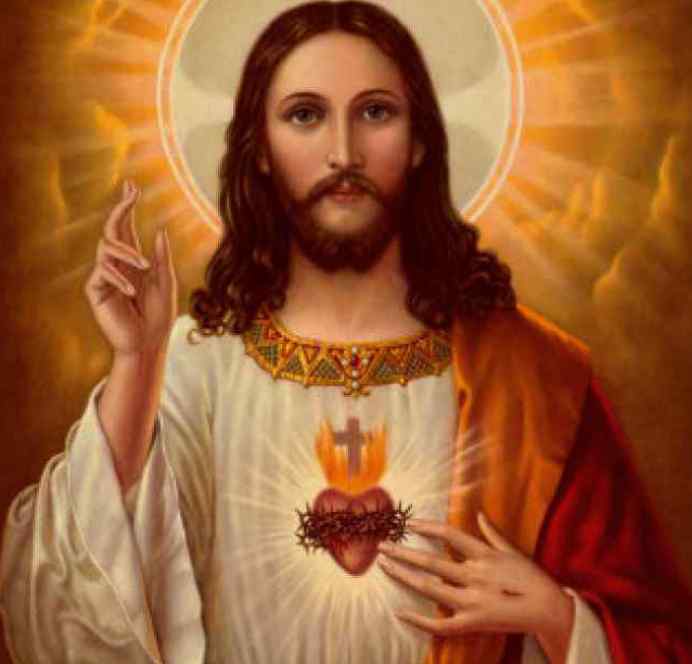
Bishop Vitalii Skomarovskyi served as rector of the Higher Theological Seminary of the Sacred Heart of Jesus from 2001 to 2011. Today, students from four communities receive formation at our seminary: diocesan seminarians, Missionaries of St Vincent de Paul, seminarians of Redemptoris Mater and Missionary Oblates of Mary Immaculate.
Follow all the latest developments and events in the life of our seminary.
Based on materials by Fr Vitalii Uminskyi.